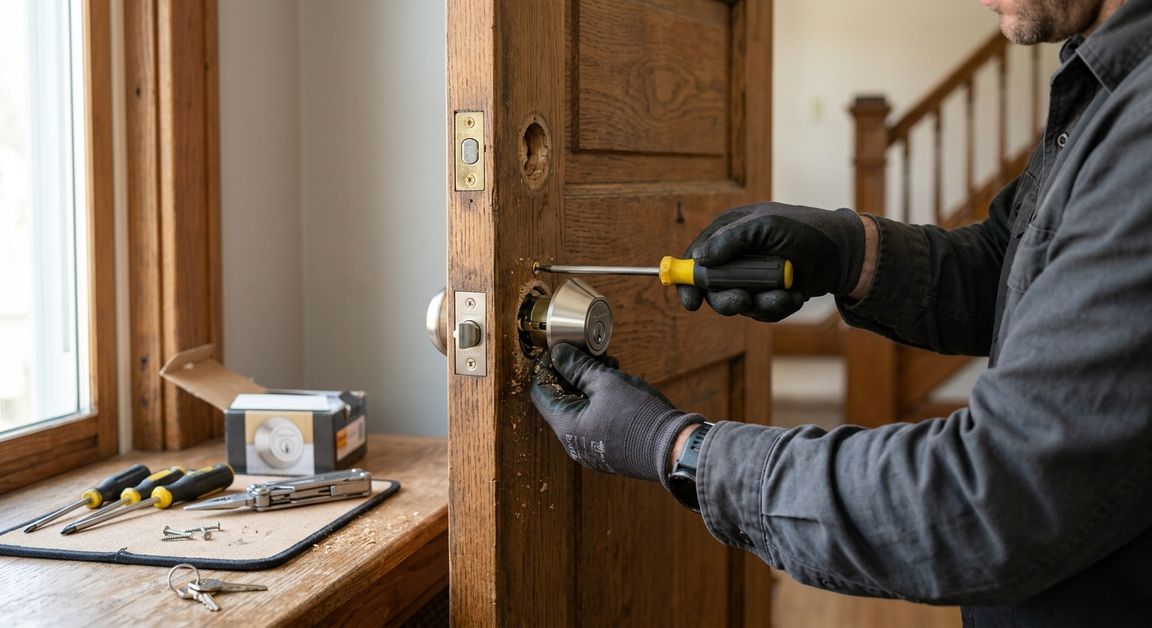
Stolen keys are a higher-risk situation than lost keys — especially if any ID was taken with them. Here is the exact response sequence.
Critical: If your keys were stolen alongside any ID that shows your home address (driver's license, utility bill, work badge with address), treat this as an emergency. Call a locksmith before you go home if possible. The window between theft and a potential attempt is short.
This guide covers: keys stolen from a bag or wallet, keys snatched in a mugging, or keys taken by someone you no longer trust. See all scenarios to confirm this is the right guide for your situation.
Do these in sequence. The first 30 minutes matter most.
Were any ID documents with your home address stolen alongside the keys? Driver's license, work ID with address, or mail in the bag all count. If yes: critical threat. If keys-only with no ID: high risk but not critical. This determines your speed.
Call before you go home if at all possible. Ask for emergency same-day service and give them your address so they can meet you there or be waiting. Most cities have locksmiths with 1-2 hour arrival times for urgent calls.
File even if there's no chance of recovery — the report documents the theft and is useful if you need to make an insurance claim. Do this while waiting for the locksmith to arrive, not before calling one.
Every exterior entry: front door, back door, garage entry door. If the locksmith arrives before you do, they will meet you on-site. Have ID ready to confirm ownership of the property.
After the rekey: change garage door codes (keypad AND remote pairing code), smart lock PINs, any gate or building access codes. If you use a key fob for a shared building, report it to building management immediately so it can be deactivated.
This is a natural time to add a video doorbell, smart lock, or exterior motion light. None of these replace a proper rekey, but they add visibility. A smart lock also lets you generate time-limited PIN codes for service workers without handing out physical keys.
Stolen keys are more dangerous than lost keys because theft is intentional. The person who took them may have also observed your address, your vehicle, or your daily routine.
The risk level depends on what was taken alongside the keys and where the theft occurred. A mugging near your home is the highest-risk scenario. Keys taken from a bag at a concert across town are still serious, but the window to act is slightly wider.
If cost is a barrier tonight, a door security bar ($20-$40 at any hardware store) is a temporary stopgap for the interior. It does not prevent entry through a window or from someone who already had access, but it slows a key-based entry. This is a one-night measure, not a solution. Schedule the rekey for first thing in the morning and call a community assistance program if needed — many cities have emergency security assistance for theft victims.
Yes, especially if you're renting. Notify your landlord in writing (text or email so there's a record) and ask them to arrange a rekey. Many leases require this. If your landlord is slow to act and you believe there is an immediate threat, most US states allow a tenant to change locks for safety reasons and provide the landlord a copy of the new key.
Call a national chain like Pop-A-Lock or Minute Locksmith if you need a trusted name. Otherwise: the locksmith should arrive in a marked vehicle, present a business card, quote by lock type before starting work, and not demand cash-only payment. If any of these fails, you are likely dealing with a scam operator. Send them away and call another locksmith.